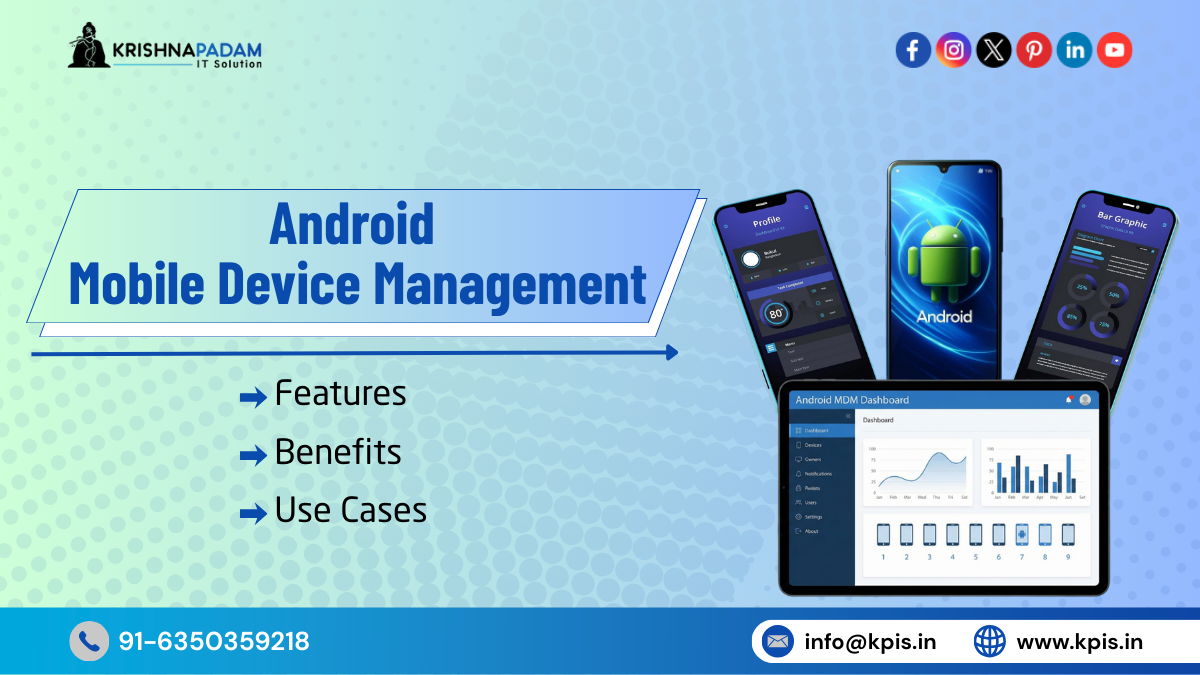
Android devices are everywhere. From front-line workers scanning inventory to executives approving deals on the go, Android has quietly become the backbone of modern business mobility. In this blog, we’ll break down- What Is Android Mobile Device Management and Why Should You Care? Discover how Android MDM secures devices, boosts productivity, and ensures compliance. Explore 7 benefits, 10 industry use cases, top challenges, and future trends in Android MDM.
Android Mobile Device Management (MDM) in 2026: Features, Benefits & Use Cases
Imagine this: your employees are out in the field, attending meetings, managing clients, or delivering services, all using their Android smartphones and tablets. Sounds seamless, right? But behind the scenes, IT teams are juggling security threats, app updates, and compliance requirements- all while trying not to slow anyone down.
This is where Android Mobile Device Management (MDM) becomes a game-changer. It’s not just a tech tool- it’s a smart, centralized way to keep devices secure, data protected, and teams productive, no matter where they are.
In 2026, with more employees working remotely and companies adopting Bring Your Own Device (BYOD) policies, Android MDM isn’t optional. it’s essential for running a modern, mobile-first business.
What Is Android Mobile Device Management and Why Should You Care?
Android Mobile Device Management is a platform that allows IT teams to remotely control, secure, and configure Android devices used by employees. MDM ensures corporate data remains protected while employees remain productive and flexible.
Why it matters:
- With BYOD (Bring Your Own Device) policies growing, businesses must balance employee freedom with security.
- Android’s open ecosystem, while versatile, exposes devices to malware and vulnerabilities.
- Regulations and data privacy laws demand strict control over corporate data on mobile devices.
- Simply put, Android MDM is how businesses keep their devices, apps, and data safe without slowing down productivity.
Android MDM vs Traditional Device Management: What Every Business Needs to Know
While both Android Mobile Device Management (MDM) and traditional device management aim to secure and control devices, they are designed for very different environments and technologies. Here’s how they differ:
Device Types and Scope
- Traditional Device Management: Primarily focuses on desktops, laptops, and servers within the corporate network. It is built for stationary devices that are mostly used in offices.
- Android MDM: Specifically designed for mobile devices like smartphones, tablets, and increasingly IoT devices. It handles devices that are constantly on the move, often outside corporate networks.
Deployment and Configuration
- Traditional Device Management: Requires manual installation or on-site configuration of software and policies, which can be time-consuming, especially for large organizations.
- Android MDM: Supports remote provisioning, zero-touch enrollment, and automated configuration, enabling IT teams to deploy devices at scale without physical access.
Security Controls
- Traditional Device Management: Uses firewalls, antivirus, and network-based controls to protect endpoints. Security is often limited to devices inside the corporate network.
- Android MDM: Provides advanced mobile security features, including device encryption, remote lock/wipe, app restrictions, compliance monitoring, and detection of compromised or rooted devices. This ensures data protection even when devices are off the corporate network.
Application Management
- Traditional Device Management: Focuses on installing and updating software on desktops and laptops, with limited control over apps used by employees.
- Android MDM: Offers full lifecycle app management, IT can push required apps, prevent installation of unapproved apps, and manage app updates remotely. This is essential for mobile workforces.
Monitoring and Analytics
- Traditional Device Management: Monitors device health and network usage, but insights are often limited to system performance within the office network.
- Android MDM: Provides real-time visibility into device health, app usage, security compliance, and potential threats, even for devices in the field. Analytics help IT teams make informed decisions and proactively resolve issues.
Support for BYOD and Remote Work
- Traditional Device Management: Was not designed for personal devices or employees working outside the office. Security can be compromised when devices leave the network.
- Android MDM: Fully supports BYOD and remote work by separating corporate and personal data, enforcing policies only on work profiles, and maintaining corporate security anywhere.
7 Reasons Why Android MDM Is a Game-Changer for Businesses in 2026
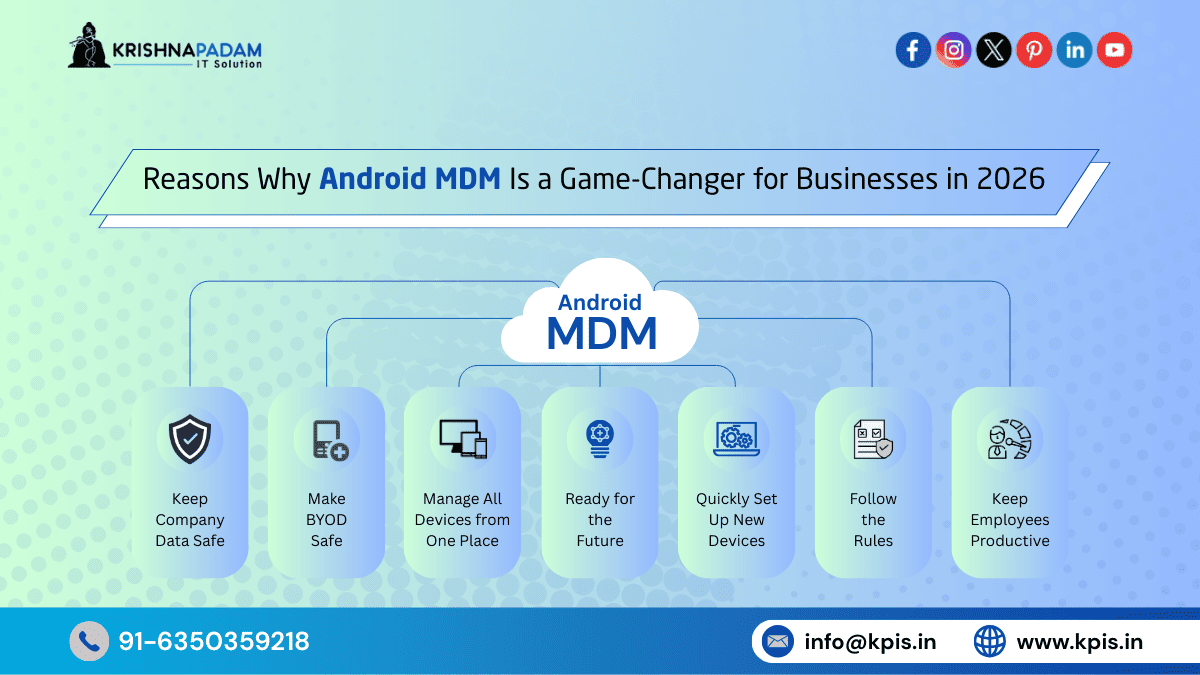
As organizations increasingly rely on mobile devices for day-to-day operations, managing these devices efficiently and securely has become critical. Here’s why Android Mobile Device Management (MDM) is no longer optional, it’s essential for businesses in 2026:
Keep Company Data Safe
Phones and tablets often have sensitive information like client details, emails, or financial data. Android MDM lets IT teams lock, encrypt, or erase data if a device is lost or stolen, keeping company information secure.
Make Bring-Your-Own-Device (BYOD) Safe
Many employees use their personal phones for work. Android MDM can separate personal and work data, so employees keep their privacy, while the company keeps its information safe.
Manage All Devices from One Place
Instead of checking every phone or tablet individually, IT can see and control all devices from a single dashboard. They can update apps, check for security issues, or fix problems remotely.
Quickly Set Up New Devices
New devices don’t need to be manually set up. With Android MDM, IT can preload apps and settings, so employees can start working right away without waiting for tech support.
Follow the Rules
Industries like healthcare or finance have strict rules about data security. Android MDM can automatically enforce rules and track compliance, reducing the risk of fines or penalties.
Keep Employees Productive
Android MDM helps push updates and apps automatically, and IT can fix problems remotely. This means employees spend less time dealing with tech issues and more time getting work done.
Ready for the Future
Technology keeps changing, and businesses need solutions that grow with them. Android MDM works with new Android updates, new devices, and even connected gadgets, so companies are prepared for whatever comes next.
10 Industry Use Cases: How Can Android MDM Transform Your Business in 2026?
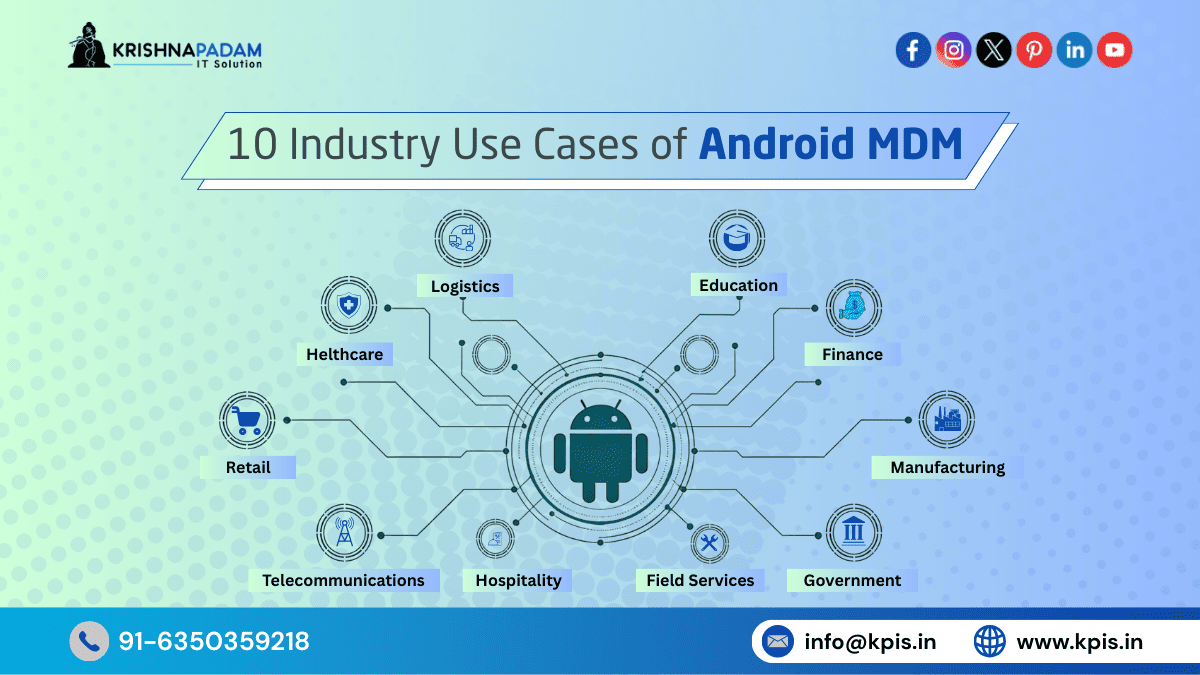
Android Mobile Device Management (MDM) is increasingly critical for enterprises that rely on mobile technology to drive operations, maintain security, and ensure regulatory compliance. Here’s how Android MDM is being used across industries:
Healthcare
Healthcare providers use Android devices to access Electronic Health Records (EHR), telemedicine platforms, and clinical applications. MDM enables HIPAA-compliant data protection, device encryption, and remote wipe capabilities, ensuring patient information remains secure even if a device is lost or stolen.
Retail
Retail chains deploy Android tablets and smartphones for inventory management, point-of-sale (POS) systems, and employee communication. MDM allows centralized app deployment, role-based access control, and real-time device monitoring, reducing downtime and improving operational efficiency across multiple locations.
Logistics and Transportation
Fleet management relies on Android devices for route optimization, delivery tracking, and real-time reporting. MDM ensures continuous connectivity, secure communication, and remote troubleshooting, minimizing operational delays and enhancing supply chain visibility.
Manufacturing
Manufacturing environments often use rugged Android devices on the production floor to monitor equipment, track assets, and manage workflows. It secures devices, locks them to approved apps, and supports zero-touch deployment and remote updates..
Education
Educational institutions deploy tablets for digital learning and administrative tasks. Android MDM ensures controlled app access, policy enforcement, and content filtering, providing a secure learning environment while maintaining compliance with data privacy regulations like FERPA.
Finance
Financial institutions handle sensitive customer and transactional data on mobile devices. MDM enables end-to-end encryption, compliance monitoring (e.g., GDPR, PCI DSS), and remote device management, protecting against cyber threats and unauthorized data access.
Government
Government agencies rely on Android devices for secure communication, field data collection, and citizen services. MDM ensures device integrity, role-based access control, and real-time auditing, meeting strict regulatory and cybersecurity standards.
Hospitality
Hotels and restaurants utilize Android devices for reservations, mobile check-ins, order management, and staff coordination. MDM provides centralized device control, application updates, and secure guest data handling, streamlining operations and enhancing guest experience.
Field Services
Technicians in field services use mobile devices for task management, reporting, and diagnostics. Android MDM allows remote configuration, application deployment, and real-time monitoring, enabling faster response times and reducing manual IT support interventions.
Telecommunications
Telecom companies use Android devices for network monitoring, maintenance, and client support. MDM ensures secure connectivity, policy enforcement, and device compliance, facilitating efficient field operations while mitigating security risks.
Across industries, Android Mobile Device Management is not just about controlling devices, it’s about enhancing operational efficiency, securing sensitive data, ensuring compliance, and enabling remote IT management. As enterprises continue to embrace mobility, MDM becomes a strategic technology enabler rather than just a security tool.
Top Challenges in Android Mobile Device Management and How to Solve Them
Managing Android devices at scale comes with unique challenges. While MDM solutions provide centralized control, enterprises still face technical, operational, and compliance hurdles. Here’s a breakdown of the top challenges in Android Mobile Device Management and practical strategies to overcome them:
Device Fragmentation
The Challenge: Android devices come in a wide range of models, manufacturers, and OS versions. This diversity can create compatibility issues, inconsistent security features, and difficulties in deploying updates.
The Solution:
- Use an MDM solution that supports Android Enterprise and multiple OS versions.
- Standardize device selection for employees where possible.
- Automate OS and security patch updates to maintain uniformity across all devices.
Security Threats
The Challenge: Android’s open ecosystem exposes devices to malware, rooting, and phishing attacks. Sensitive corporate data on mobile devices is at risk, especially in BYOD environments.
The Solution:
- Enforce device encryption, secure passwords, and biometric authentication.
- Implement remote lock and wipe capabilities to protect data if a device is lost or stolen.
- Monitor devices in real time for suspicious activity and compromised devices.
User Resistance and Privacy Concerns
The Challenge: Employees may feel MDM is intrusive, particularly on personal devices under BYOD policies. Resistance can lead to non-compliance and attempts to bypass security controls.
The Solution:
- Clearly communicate the purpose of MDM and how it protects both the company and the employee’s personal data.
- Use containerization or work profiles to separate personal and corporate data.
- Provide training and support to help employees understand MDM policies.
Compliance with Regulatory Requirements
The Challenge: Industries such as healthcare, finance, and government have strict regulatory standards (HIPAA, GDPR, PCI DSS). Managing compliance across hundreds or thousands of devices is complex.
The Solution:
- Implement MDM with automated compliance monitoring and reporting.
- Enforce policies for encryption, app usage, and access control to meet regulatory requirements.
- Schedule regular audits and generate reports for internal and external compliance purposes.
App Management and Version Control
The Challenge: Ensuring employees use approved apps while preventing the installation of risky or unauthorized apps is challenging, especially in large organizations.
The Solution:
- Use app whitelisting/blacklisting to control which apps are allowed or blocked.
- Deploy business-critical apps remotely and automatically update them to the latest secure versions.
- Monitor app usage analytics to detect unauthorized installations or suspicious behavior.
Remote Troubleshooting and Support
The Challenge: IT teams often struggle to provide immediate support for devices in the field, leading to downtime and productivity loss.
The Solution:
- Use MDM platforms that enable remote diagnostics, configuration, and troubleshooting.
- Provide self-service portals for employees to resolve minor issues without IT intervention.
- Integrate ticketing systems with MDM for faster issue resolution.
Balancing Security and User Experience
The Challenge: Overly strict policies can frustrate employees, while lax policies can expose corporate data. Striking the right balance is critical.
The Solution:
- Implement role-based policies so that security controls align with job responsibilities.
- Use work profiles to separate corporate apps from personal apps, ensuring minimal interference with personal use.
- Continuously evaluate policies to maintain both security and usability.
By choosing a robust MDM platform, enforcing smart policies, and educating employees, organizations can maintain secure, compliant, and productive mobile environments.
What Will Android MDM Look Like in 2026 and Beyond? Key Trends to Watch 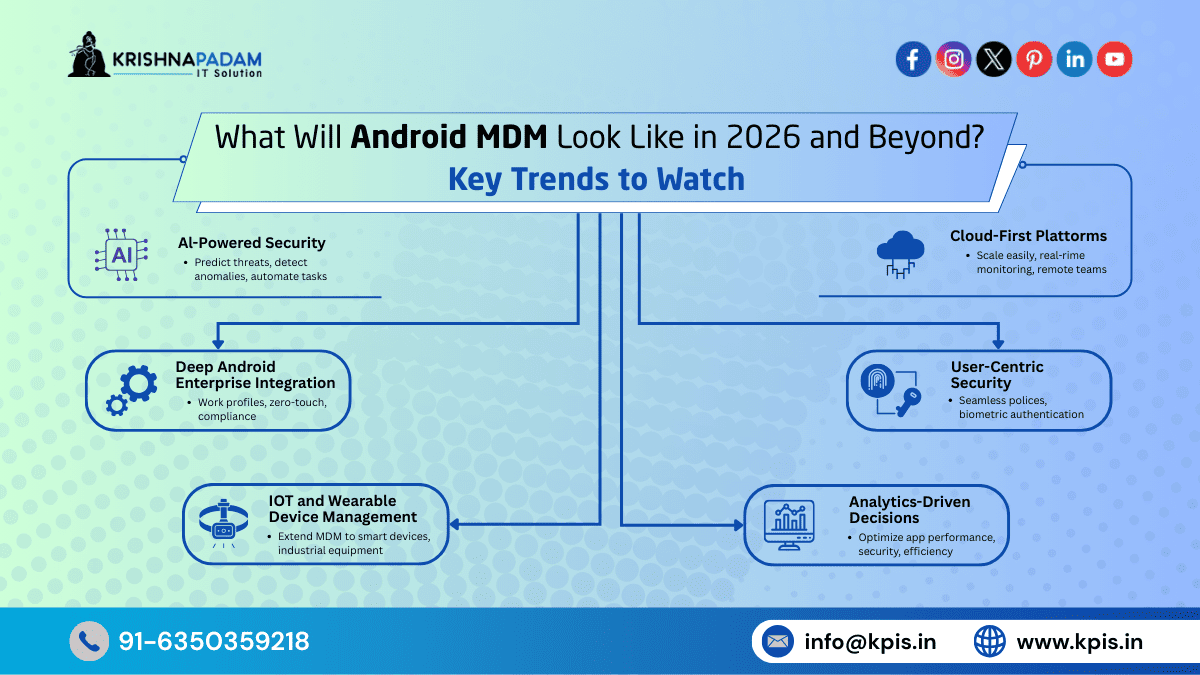

The future of Android MDM is not just about controlling devices, it’s about intelligent management, security, and enabling seamless enterprise mobility. Here’s what to expect in the coming years:
- AI-Powered Security: Predict threats, detect anomalies, and automate routine IT tasks.
- Deep Android Enterprise Integration: Leverage work profiles, zero-touch enrollment, and advanced compliance tools.
- IoT and Wearable Device Management: Extend MDM to smart devices and industrial equipment.
- Cloud-First Platforms: Scale easily, provide real-time monitoring, and support remote teams.
- User-Centric Security: Seamless policies and biometric authentication ensure security without disrupting productivity.
- Analytics-Driven Decisions: Use device insights to optimize app performance, security, and operational efficiency.
Android MDM is evolving from device management to enterprise mobility management, enabling businesses to securely manage all mobile endpoints in a connected ecosystem.
Why KPIS Pvt. Ltd. Is the Go-To Choice for Android MDM Solutions
In a world where mobile devices drive business operations, choosing the right Android Mobile Device Management (MDM) partner can make all the difference. KPIS Pvt. Ltd. stands out as a leader in developing secure, scalable, and intelligent MDM solutions that help organizations stay productive, compliant, and future-ready. With KPIS, you get:
- Expertise in building scalable, secure, and intelligent MDM solutions.
- Advanced security, including encryption, remote wipe, and compliance monitoring.
- Customizable and scalable platforms tailored to your business needs.
- Seamless integration with enterprise systems, powered by cloud, AI, and Android Enterprise APIs.
- User-focused design for productivity without compromising security.
- Proactive support and consultation throughout deployment and beyond.
Ready to take your Android MDM strategy to the next level? Hire our dedicated developers at KPIS Pvt. Ltd. to build, customize, and optimize your mobile device management solutions. With our expertise, your organization can turn mobile device management into a strategic advantage, ensuring security, efficiency, and future-ready enterprise mobility.
Conclusion
In 2026 and beyond, Android Mobile Device Management is no longer optional, it’s essential. With robust MDM, businesses can secure devices, protect sensitive data, ensure compliance, and enhance productivity, all while supporting a modern mobile workforce.
Partnering with experts like KPIS Pvt. Ltd. ensures that your organization can stay ahead in enterprise mobility, manage devices at scale, and future-proof your IT strategy.
Ready to elevate your Android MDM strategy? Hire our dedicated developers and transform mobile device management into a strategic business advantage today.