Running a restaurant isn’t just about serving delicious food, it’s about managing operations efficiently, maximizing revenue, and delivering an unforgettable customer experience. That’s where a Restaurant POS (Point of Sale) system comes in. This article explores how does a restaurant POS system help boost sales and profits while improving customer satisfaction.
Did you know that restaurants using modern POS systems report a 20–30% increase in sales and up to 25% faster service times? From fast-casual diners to fine dining, POS technology is no longer optional, it’s a game-changer for boosting profits and scaling your business.
Ready to take your restaurant’s success to the next level! Explore how a restaurant POS system helps increase sales, improve efficiency, and enhance profitability in 2026.
What is a Restaurant POS System?
According to Statista, the global market size of the POS industry is expected to reach a staggering $27.7 billion by 2026.
A Restaurant POS system is a digital platform that manages all aspects of your restaurant operations from taking orders and processing payments to managing inventory and analyzing sales data. Unlike traditional cash registers, modern POS systems integrate with cloud technology, mobile devices, and analytics tools to provide a comprehensive business solution. Key functions include:
- Order management (dine-in, takeout, and delivery)
- Payment processing (card, mobile wallets, or contactless)
- Inventory tracking and supplier management
- Customer relationship management (loyalty programs, promotions)
- Real-time analytics and reporting
How Does a Restaurant POS System Help Boost Sales And Profits? in 2026
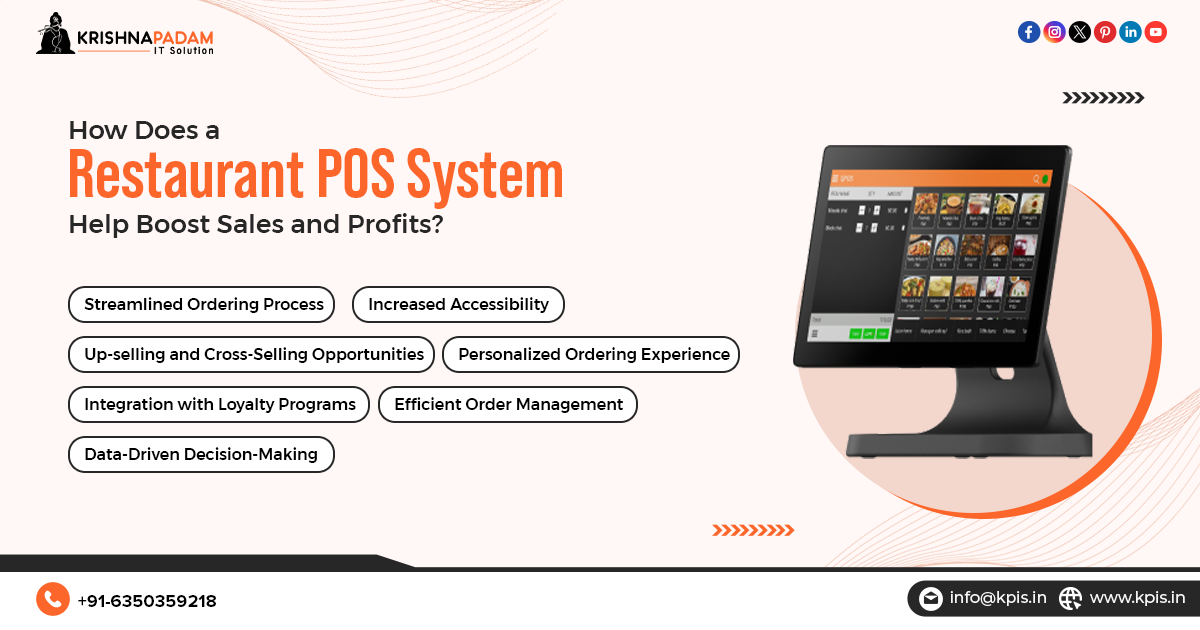
In 2026, the restaurant industry is more competitive than ever. Studies show that restaurants leveraging advanced POS systems can see up to a 30% increase in sales and reduce order errors by 70%. Let’s explore how a POS system can revolutionize your restaurant operations and revenue. Delve into how a restaurant POS system helps boost sales and profits in 2026:
Streamlined Ordering Process
- Traditional methods of taking orders, such as phone order or handwritten in-person interactions, can be prone to errors and delays. A POS system software provides an intuitive digital platform for order entry, ensuring accuracy and speed. Orders go directly to the kitchen, minimizing miscommunication.
- This process can increase table turnover by 20–30%, allowing restaurants to serve more customers and boost revenue.
Increased Accessibility
- Modern POS systems integrate with online and mobile ordering, enabling customers to place orders anytime, anywhere. This digital accessibility is crucial in today’s fast-paced world, where convenience often drives customer choice.
- Restaurants offering online ordering can reach a 50% larger customer base, increasing overall revenue potential.
Up-selling and Cross-Selling Opportunities
- A smart POS system can highlight menu items, promotions, and add-ons during the ordering process. Suggestive selling techniques like recommending popular dishes, sides, or beverages- encourage customers to spend more per order.
- Up-selling and cross-selling through POS systems can increase average order value by 10–15%.
Personalized Ordering Experience
- POS systems allow customers to customize orders, from ingredient substitutions to dietary preferences. This personalized approach enhances satisfaction, builds loyalty, and encourages repeat business.
- Personalized dining experiences lead to 25% higher customer retention, directly impacting long-term revenue.
Integration with Loyalty Programs
- Modern POS platforms integrate seamlessly with loyalty programs, tracking customer preferences, order history, and spending patterns. Restaurants can use this data to create targeted campaigns, personalized promotions, and exclusive offers, incentivizing repeat visits.
- Restaurants with POS-driven loyalty programs report 20–30% more repeat orders, significantly boosting sales.
Efficient Order Management
- POS systems automate order routing to the kitchen, reducing reliance on manual processes and minimizing errors. Additionally, real-time order tracking keeps customers informed, improving transparency and satisfaction.
- It educes service time by up to 25%, allowing restaurants to handle higher volumes and increase revenue.
Data-Driven Decision-Making
- Every order processed through a POS system generates valuable data- popular menu items, peak hours, customer feedback, and sales trends. This data empowers restaurant owners to identify areas for improvement, optimize the menu, adjust pricing strategies, and target marketing efforts effectively.
- Data-driven decisions can increase restaurant profits by 15–20% by targeting high-demand items and reducing operational inefficiencies.
Why Do Restaurants Need a POS System?
When you own a restaurant, you know that time is of the essence. Each minute counts when providing exceptional service and maximizing profitability. However, modern restaurants must have a POS system to ensure smooth transactions to manage their process and inventory. Without a POS system, orders are taken with a piece of paper, calculations are prone to errors, and inventory is a guesswork. POS provides direction and saves money on resources, making it a game-changer.
Make it more comfortable to take orders and pay for them
- POS systems eliminate the hassle of manual order entry and cash handling, minimizing errors and ensuring faster service. Customers can place orders directly at their tables or kiosks, while kitchen staff receive real-time updates on orders, leading to quicker preparation and delivery.
Give your customers a better experience
- POS systems enable restaurants to provide personalized dining experiences, offer loyalty programs, customize menus, and accept various payment options. This fosters customer satisfaction and loyalty, ensuring repeat visits and driving business growth.
Better Inventory Management
- POS systems track inventory levels, preventing stockouts and overstocking. This data-driven approach optimizes food costs, reducing waste and enhancing profitability.
Accurate Financial Management
- POS systems generate detailed sales reports, providing valuable insights into sales trends, customer preferences, and staff performance. This data enables restaurant owners to make knowledgeable decisions about pricing, promotions, and staff training.
Importance of POS Systems in Restaurant for 2026
There is no secret that POS systems are essential for restaurants. They can help make operations more efficient, give customers a better experience, and help grow the business. But it is not just about taking orders and collecting payments- POS systems can help restaurants succeed. With all the big data out there, POS systems can give restaurants a better understanding of how customers are spending, how sales are going, and how the business is running. This data can help restaurants make better decisions to gain more money, higher profits, and happier customers.
How to Use a POS System in a Restaurant?
The detailed steps affected using a POS system will vary depending on the selected software and the restaurant-specific needs. However, the general process typically involves the following steps:
- Setting up the POS system:- This involves configuring the system with menu items, customer information, payment options, and other relevant settings.
- Training staff:- Staff members need to be trained on how to use the POS system effectively, including order entry, payment processing, and data analysis.
- Integration with other systems:- The POS system may need to be integrated with other business systems, such as accounting software and inventory management systems, to ensure seamless data exchange.
- Regular maintenance:- POS systems require regular updates and maintenance to ensure optimal performance and security.
How Does the Online Restaurant POS System Work?
In an era of digital transformation, online POS systems have emerged as game-changers. These cloud-based solutions provide real-time access to restaurant data, regardless of location or device.
With an online POS system, restaurateurs can manage orders, payments, and inventory management from anywhere, anytime. This flexibility allows them to optimize operations, even from the comfort of their homes.
Additional Points:
- POS systems are valuable for restaurants, from small independent establishments to large chains.
- The rapid adoption of mobile POS systems has further revolutionized the industry, allowing restaurants to accept orders and payments from anywhere.
- Cloud-based POS systems offer flexibility and scalability, enabling restaurants to access their data and manage operations from anywhere.
- POS systems are constantly evolving, incorporating new features and integrations to meet the ever-changing needs of the restaurant industry.
Trends in Restaurant POS Systems for 2026
As we head into 2026, several cutting‑edge trends are reshaping how restaurants operate, compete, and grow. Let’s explore the key trends that every restaurateur should know.
- Cloud-Based Platforms: Access real-time data anywhere, anytime.
- AI & Predictive Analytics: Forecast demand, optimize inventory, and boost profits.
- Mobile & Tablet Ordering: Speed up service and improve order accuracy.
- Contactless & Digital Payments: Fast, secure, and seamless transactions.
- Integrated Online Ordering & Delivery: Manage dine-in, takeout, and delivery from one system.
- AR & VR Experiences: Engage customers with immersive menus, virtual tours, or interactive dining experiences.
- Loyalty & Rewards Programs: Personalize offers and increase repeat business.
- Real-Time Reporting & Dashboards: Make data-driven decisions instantly.
- API Integrations: Connect with accounting, payroll, inventory, and marketing tools effortlessly.
Next-Generation Restaurant POS Software Development Company- KPIS Pvt. Ltd.
Are you tired of long wait times, misplaced orders, and unhappy customers? As a restaurant owner or manager, these difficulties negatively impact your sales and revenue. But what if there was a solution to streamline the ordering process and enhance the overall customer experience?
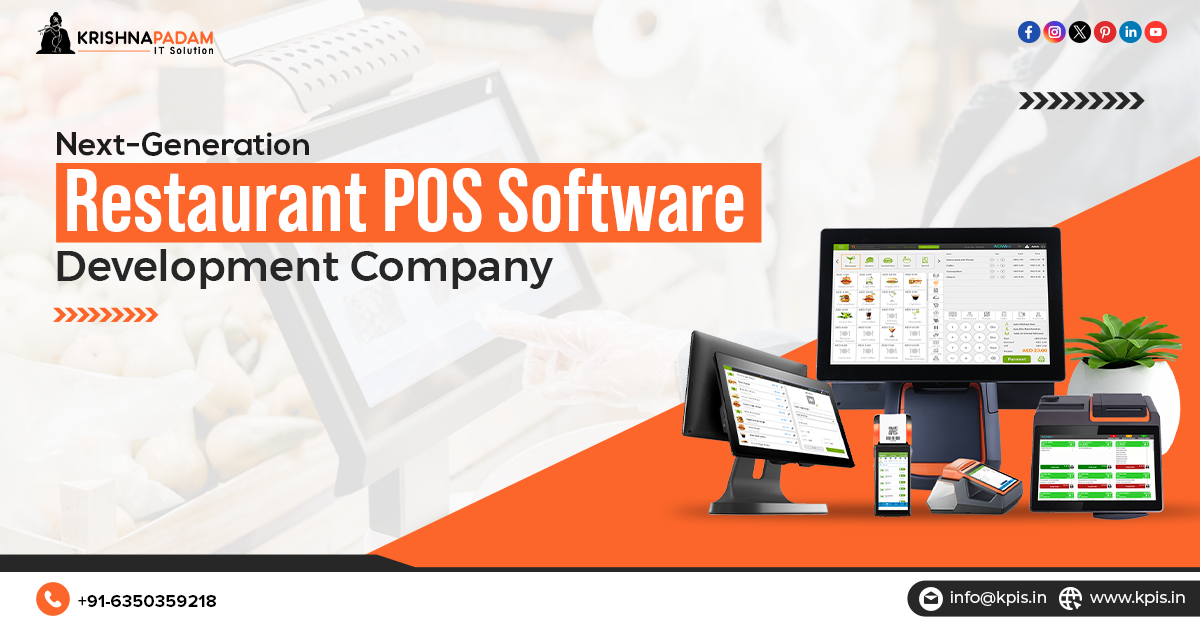
To stay ahead of the competition, as a top Restaurant POS Software Development Company in India, KPIS Pvt. Ltd. builds customized and advanced POS software that permits you to manage your restaurant business. Our expert developers specialize in advanced technologies such as real-time order tracking, cloud-based POS integration, AI-driven recommendations, table management, and mobile payment solutions, ensuring your app is built with the latest innovations in restaurant tech.
Conclusion
The restaurant industry is in a demanding area, but POS systems are here to help. They can make operations more efficient, give customers better experiences, and help businesses grow. With the right tools, restaurants can stay ahead of the competition and make the most of the ever-changing dining scene. A POS system is a powerful tool that can help restaurants make the most of their operations, boost their brand, and ensure they stay at the top of their game. Whether you own a small café or a large restaurant chain, adopting POS solutions can pave the way for sustainable growth.
Unlock your restaurant’s dedicated potential for how does a restaurant POS system help boost sales and profits by choosing the right POS software and see the difference in your sales and customer satisfaction today!